Huntington Beach City Council is embarking on an exciting new initiative to establish a community garden featuring an Integrated Multi-Trophic Aquaculture (IMTA) system, aiming to foster sustainability and community engagement. This forward-thinking project was brought forward by Councilman Andrew Grul and championed by Mayor Pat Burns, building on the recent reacquisition of a significant piece of city land. The proposal, which passed unanimously, directs city staff to explore the feasibility of this innovative garden, with findings expected within six months.
The inception of this project stemmed from the availability of underutilized city property, specifically an 11.5-acre former rail easement on the north end of town near Boeing and Edwards that Mayor Burns was instrumental in reacquiring for the city. Councilman Grul seized this opportunity, recognizing the potential to create not just a traditional community garden, but a more advanced system that integrates food production with ecological benefits.
The proposed system, Integrated Multi-Trophic Aquaculture (IMTA), involves the co-cultivation of species from different trophic levels within the same production system. Unlike conventional polyculture, IMTA specifically integrates complementary species that enhance systemic balance. This means the waste and uneaten feed from one species, such as fin fish, are utilized as resources by lower-level trophic species, like plants or other aquatic life, promoting resource efficiency.
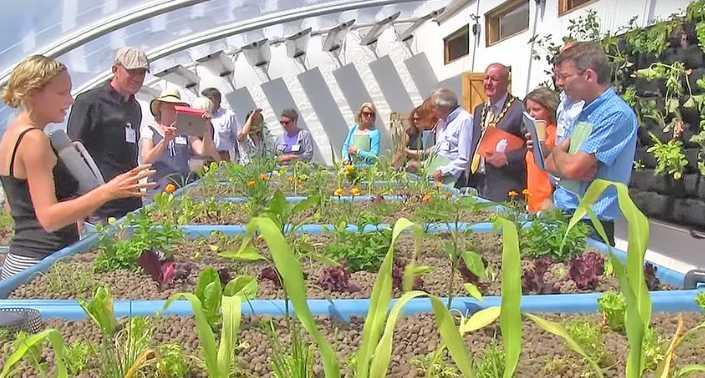
A key aspect of this IMTA system, as described by Councilman Grul, is its closed-loop functionality. In this design, vegetables are grown, and trimmings are fed to fish in a monitored, clean pond. The fish's waste, rich in nitrogen, then flows back into the vegetable gardens, acting as an organic fertilizer and creating a self-sustaining, organic system. This process minimizes the need for external inputs and recycles nutrients effectively.
Huntington Beach already has a successful precedent for this type of system. Councilman Grul noted that an organic vegetable garden with aquaculture, an integrated multi-trophic aquaculture system, has existed at Huntington Beach High School for 10 to 15 years, started by teacher Greg Guran. This established footprint in the city proves that such a system is viable and can be scaled out to other areas.
Community gardens, in general, offer significant benefits to citizens. Research shows they contribute to 'People, lifestyle, and sense of community,' with citizens often being the main drivers of these initiatives due to motivations, purposes, and benefits they derive. They provide opportunities for individuals to get involved, establish "green thumbs," and foster a vibrant hub for community events like farmers markets.
For cities, urban gardens, including community gardens, are seen as a relevant urban policy directed towards sustainable development (SD). They contribute directly to urban sustainability, although their potential can sometimes be hindered by a lack of acknowledgment and integration into local public policies and urban planning frameworks. By embracing this project, Huntington Beach aims to proactively support urban sustainability.
The IMTA system offers distinct environmental advantages over traditional local city gardens or aquaculture. By integrating different trophic levels, it reduces waste, minimizes reliance on external feeds and fertilizers, and improves water quality through bioremediation. It also fosters biodiversity by mimicking natural ecosystems, leading to more resilient and stable aquatic environments, and efficiently uses nutrients from waste to prevent pollutants from entering the environment.
Economically and socially, IMTA systems enhance sustainability. They allow for diversification of agricultural outputs and strengthen income reliability, reducing reliance on a single market commodity. Cleaner waters and healthier ecosystems can also support local economies, especially those dependent on natural resources for tourism and fishing. Moreover, IMTA can generate job opportunities due to the need for specialized labor and management, contributing to economic growth.
The proposal has been met with overwhelmingly positive community feedback. Councilman Grul reported being "inundated with messages and emails from people that want to help," indicating widespread support and eagerness for volunteer involvement, described as "all positive, non-political". Council members also lauded the project as a "goodwill gesture" and a "unifying item and project for the community".
Despite the project's unifying potential, some council members acknowledged that it had faced "absurd" and "disheartening" attacks, particularly from individuals with differing political views. However, proponents emphasized the project's good intentions and its ability to bring people together, noting that "nothing brings people together more than, you know, gardening".
The immediate next step is for staff to conduct a feasibility study over the next six months, exploring potential sites, environmental impacts, timelines, and community engagement strategies. The goal is to determine how to best establish this garden and eventually scale it out to other "gray areas" within Huntington Beach, further enhancing the city's commitment to marine stewardship and sustainability.